snacking meaning

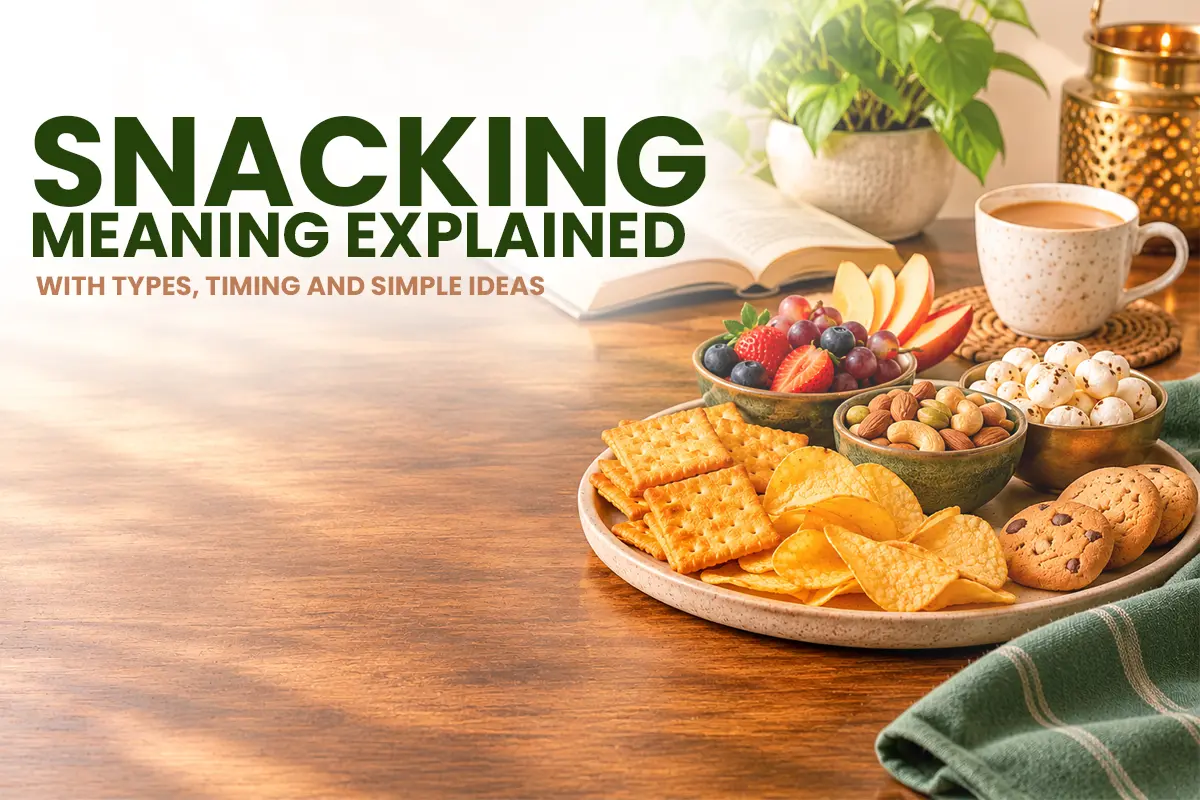
Snacking Meaning Explained With Types, Timing and Simple Ideas

Overview

Snacking meaning is simple once you break it down. It refers to eating small amounts of food between main meals. This blog covers what snacking really is, why we do it, the common types of snacks and easy ways to snack better throughout the day.

Introduction

Snacking meaning is often mixed up with overeating. A snack is actually a planned, small bite that keeps you going until the next meal. Most of us snack without thinking about it. It could be a biscuit with tea or a fruit after a walk. Understanding the habit helps you enjoy it more and choose better.

What Is Snacking in Simple Words?

If someone asks what is snacking, the shortest answer is eating a small portion of food outside breakfast, lunch and dinner. A snack is usually lighter than a meal, quick to eat and often eaten on the go.

The meaning of snacking has changed over time. Earlier, snacks were mostly homemade and eaten at fixed times. Today, they also include ready-to-eat packs and fruit cups that suit busy schedules.

Why We Feel Like Snacking Between Meals

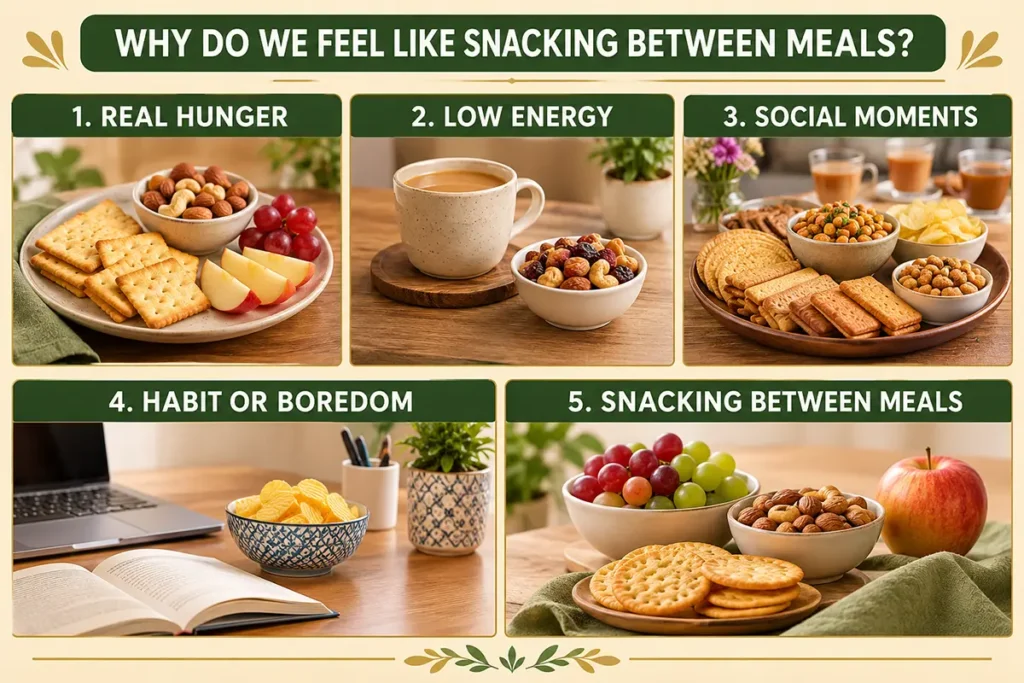
Part of the snacking meaning lies in the reason behind it. There are a few common reasons we reach for food outside mealtimes.

  • Real hunger after a long gap since the last meal
  • Low energy in the middle of work or study
  • Social moments like tea with colleagues or family
  • Habit or boredom while watching TV or scrolling on the phone

Snacking between meals is normal and can even help. A small bite keeps hunger steady so you do not overeat at dinner. The key is knowing which of these reasons is behind the craving. Real hunger deserves a snack. Boredom often just needs a glass of water or a short walk.

Types of Snacks and How They Differ

Once you know why you snack, the next step is knowing your options. The main types of snacks can be sorted by taste and how filling they are.

Type Examples Good For
Savoury
Crackers, chivda, roasted chana
Salt cravings and tea time
Sweet
Biscuits, wafers, laddoo
A quick treat or dessert craving
Fresh
Fruit, cucumber, sprouts
Light and hydrating breaks
Protein-rich
Nuts, paneer cubes, boiled eggs
Staying full for longer
Baked
Rusk, cookies, khari
Dunking in tea or coffee

Most homes keep a mix of these. Good snacking food covers both taste and fullness without being a full meal.

Snacks Between Meals and the Right Timing

Timing matters as much as the snack itself. Snacks between meals work best about two to three hours after a meal. Keep the snacking meaning in mind here, since a snack should never replace a meal.

Mid Morning Snack

Around 11 am is a common slot. A fruit, a few nuts or a light biscuit with tea is enough.

Evening Snack

Between 4 pm and 6 pm, most people feel the biggest dip. Crackers, chaat or a small bowl of chivda work well.

Late Night Snack

Keep this small or skip it. Warm milk or a few nuts work if you are hungry.

Simple Snacking Ideas for Busy Days

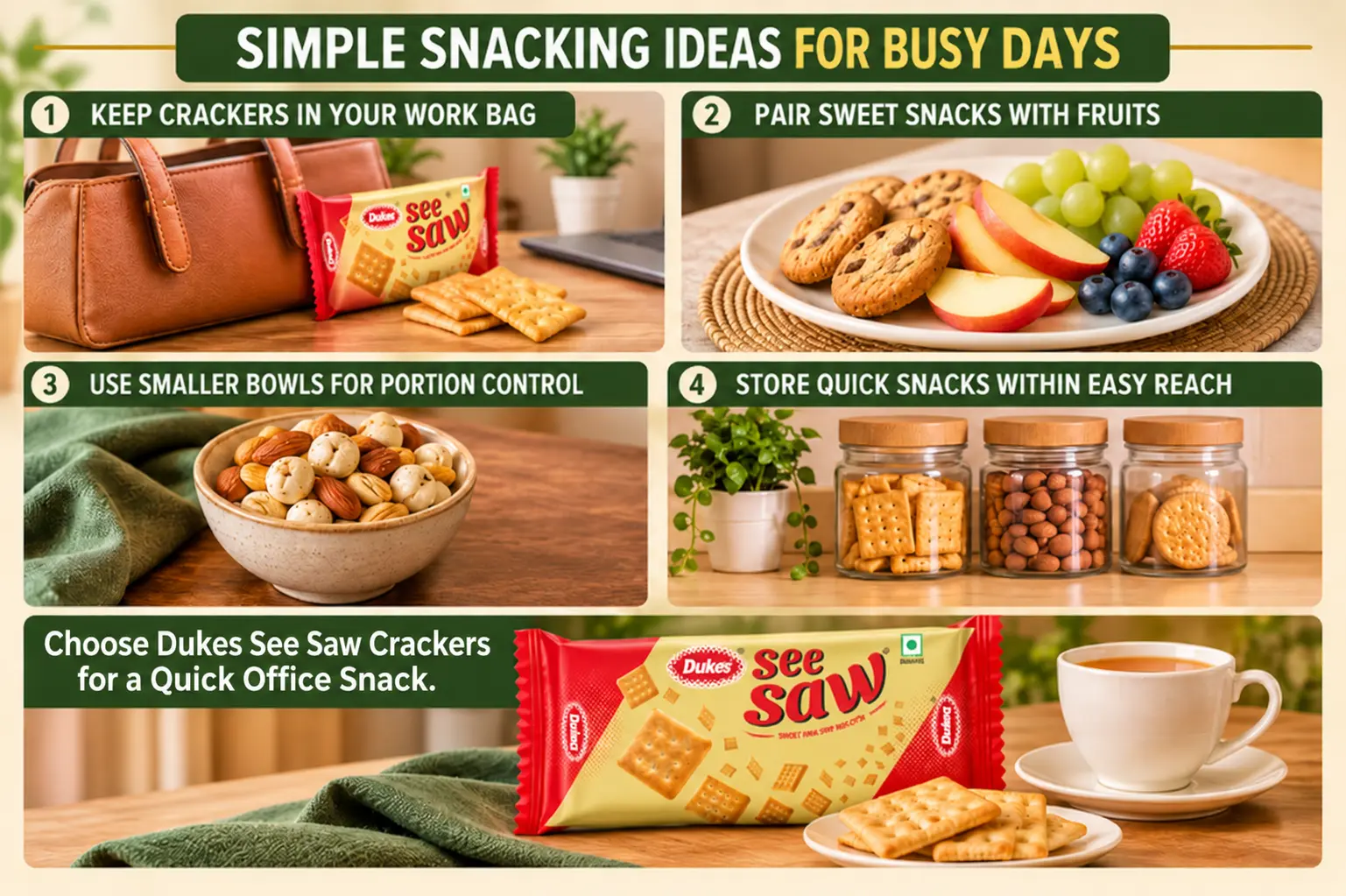
Planning ahead is the easiest way to snack better. Here are a few practical snacking ideas that fit any schedule. Each of them keeps portions small and easy to manage, which is what the true snacking meaning is all about.

  • Keep a small pack of crackers like Dukes See Saw in your work bag.
  • Pair a sweet bite with fruit to balance the plate.
  • Use smaller bowls instead of eating from the pack.
  • Store quick snacks at eye level and treats a little higher.

For tea time at the office, a light cracker such as Dukes Italian Crisps gives you a thin, crisp bite without feeling heavy. These snack ideas take almost no effort and fit into any routine.

Keeping Your Snacking Habit Balanced

Snacks are meant to be enjoyed. Balance simply means watching portion and frequency. The Indian Council of Medical Research and National Institute of Nutrition (ICMR-NIN), in its Dietary Guidelines for Indians 2024, advises keeping added sugar below 5 percent of total daily energy intake. So sweet snacks are best enjoyed in small portions.

The real snacking meaning comes down to choice. Pick snacks you enjoy, eat them mindfully and stop when you feel satisfied.

Snack the Way You Like With Dukes

Every family gives its own snacking meaning to the day, and Dukes has been part of many of them for years. Crisp crackers, classic tea biscuits and sweet treats in easy pack sizes make it simple to snack well every day. Take a look at the full Dukes range and fill your shelf with snacks the whole family enjoys.


Key Takeaways

  • Snacking means eating small portions of food between main meals.
  • People snack because of hunger, low energy, social moments or habit.
  • Snacks can be savoury, sweet, fresh, protein rich or baked.
  • The best time for a snack is two to three hours after a meal.
  • Small bowls and planned snacks keep the habit balanced.

Frequently Asked Questions

What is the meaning of snacking?

Snacking means eating a small portion of food between your main meals, usually to manage hunger or energy dips.

Is snacking between meals good?

Yes, when the portions are small and the snacks are chosen with care. It can stop you from overeating at the next meal.

How many snacks should I have in a day?

Most people do well with one or two small snacks a day, usually mid morning and in the evening.

What is the difference between a snack and a meal?

A snack is smaller, quicker and lighter than a meal. It bridges the gap between meals and does not replace them.

What are some good snacks for work?

Crackers, nuts, fruit, roasted chana and light biscuits are easy to carry and keep you going through the afternoon.